
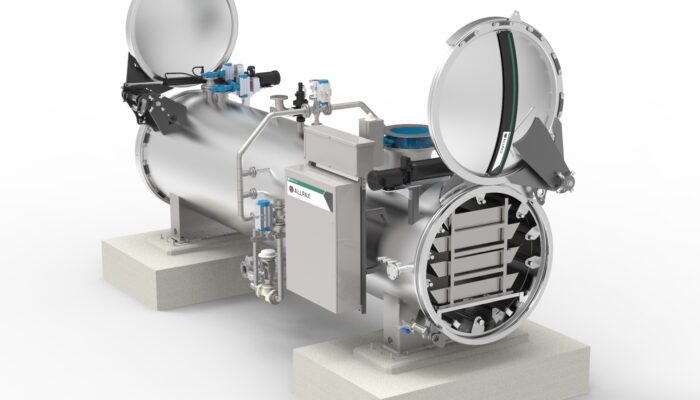
A retort that cooks product and also brings the product down to refrigerated temperatures without mechanical refrigeration When large volumes of a food ingredient are processed in a prepared foods manufacturing line, it is almost always desirable to bring the product up to cooking temperature and back down to the desired mixing or blending temperature as soon as … [Read More...] about THE VACUUM-COOLED PRODUCT COOKER
Main Content
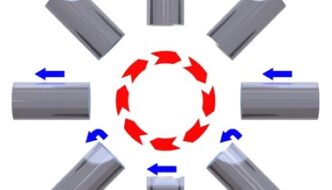
Retort Agitation Methods, Applications and Benefits
One of the benefits of retort processing, also known as commercial sterilization, is that it provides a food or beverage manufacturer the ability to produce a product that is “shelf stable” at room temperature for extended periods of time. The process usually occurs at temperatures ranging from 240°F/115°C to 270°F/132°C. These temperatures exceed that of […]
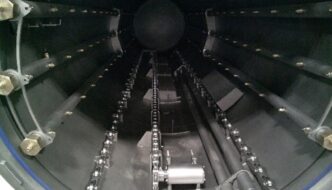
Retort Room Automation
A Brief Overview One of the many considerations to be addressed when designing and equipping an Automated Batch Retort System (ABRS) is how to convey the … [Read More...] about Retort Room Automation
Which Type of Retorting System Is Best Suited for Your Containers and Products?
Shelf stable food packaging has significantly evolved during the past 20 years, from the standard metal can and glass jar, to value-added polymeric and composite pouches, bowls, cups, and trays. Because of this progression, the ordinary saturated steam or static water immersion retort has been found to be inadequate for delivering an optimum thermal process […]
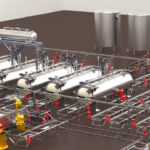
Sustainability in Batch Retort Processing
Sustainability has become more than just a buzzword. The effects of a growing global population tax our limited resources. In the modern age of food manufacturing, it’s not enough to just run a clean operation. New efforts are needed to reduce and/or reuse the resources currently employed. Additionally, new governmental regulations and natural market evolution […]
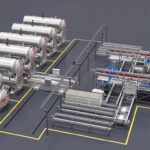
I Need to Commercially Sterilize My Product(s)
What Kind, What Size and How Many Batch Retorts Do I Need? So you have, or want to introduce, a containerized shelf-stable product to the consumer-packaged goods (CPG) market. Batch retort solutions offer the greatest range of technology and flexibility versus any other type of process solution that exists today. Here are some key considerations […]